Wednesday, February 12, 2020
prvi
movie.spasoje.com
spasoje.com/amazon
sport.spasoje.com
iphone.spasoje.com
music.spasoje.com
food.spasoje.com
movie.spasoje.com
android.spasoje.com
windows.spasoje.com
celebrity.spasoje.com
googlenews.spasoje.com
spasoje.com/news/
spasoje.com/City/

Thursday, January 23, 2020
Tuesday, January 7, 2020
Sunday, January 5, 2020
1967 Ferrari 275GTS/4 N.A.R.T. Spider - $27,500,000
About a year before the aforementioned Ferrari 250 GTO moved the record up to $38 million, this Mercedes-Benz racing car set a world record for the most expensive car sold at auction. Listed at the Bonhams Goodwood Festival of Speed sale in July 2013, the Formula 1 single-seater's exceptional provenance included wins by renowned F1 driver Juan Manuel Fangio. The car had a fuel-injected, 2.5-liter inline-eight engine. The W196 actually set three world records at the same time: the priciest Formula 1 car, the most expensive Mercedes-Benz, and the most expensive car of any make sold at auction.
1962 Ferrari 250 GTO - $38,115,000
The Ferrari 250 GTO is an extremely sought-after car, but when this example sold earlier this summer at the Quail Lodge in Monterey, California, it set a new world record. Although $38 million sounds like an extreme sum to pay for any car at auction, the figure was actually lower than the auction company's initial estimate of $50 million. Why the exorbitant price tags? Ferrari only ever built 39 units of the 250 GTO, a racing homologation special, and the cars very rarely change hands in public auctions.
Saturday, August 17, 2019

Saturday, November 3, 2018
Choosing noice isolation
Choosing a sound insulation
https://www.castorama.fr/idees-et-conseils/choisir-un-isolant-phonique/CF_CPRD_npcart_100351.art
collapsed,Tips by room
Summary of this section
The choice of materials for sound insulation
Phonic insulators of natural origin with synthetic insulators, the choice is vast. The selection of an insulating material depends both on the surface to be insulated and the desired acoustic attenuation. Here are our tips for calculating the sound insulation coefficient you need and evaluating the performance of sound insulators.
expanded,Materials for sound insulation
The different acoustic insulators
Insulators absorb sound to improve the acoustic comfort of your home.Choose your material according to the nature of the noise and the type of surface to be insulated (wall, partition, floor or ceiling).
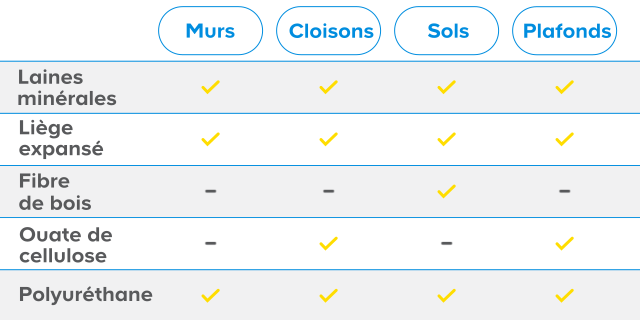
Depending on the material chosen, the acoustic performance differs.

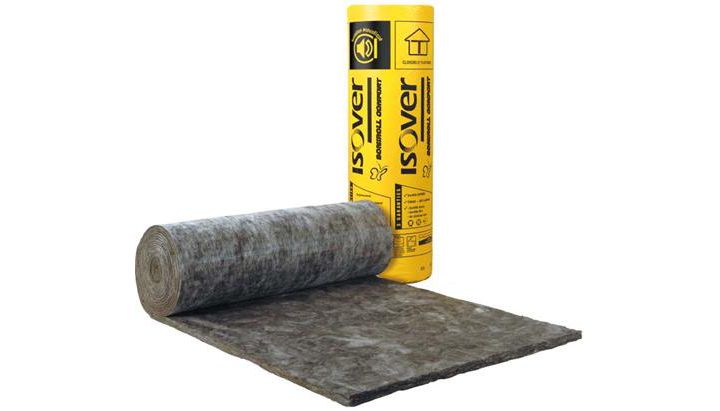
Wool of mineral origin
The fibrous mattress of rock wool and glass wool traps airborne noise as well as impact noises. However, wools need to lay a thick often important, reducing the space to live.
Expanded cork in plates
Suitable for all surfaces, it combines good sound insulation with excellent thermal insulation.
Wood fiber
This natural fiber is ideal for soil insulation.
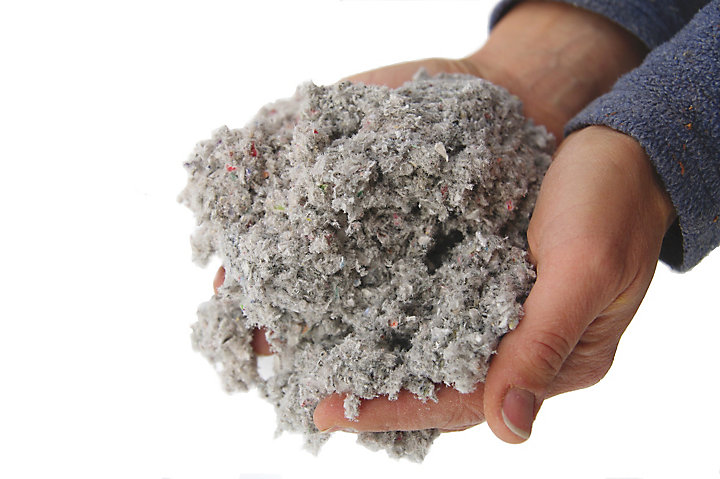
Cellulose wadding
Lightweight, it is ideal for partitions and false ceilings.
Polyurethane foam
Less insulating than mineral wool, it is much lighter and not very thick, which allows it to be used in many situations.
45 dB so that the interior sound level does not exceed 25 dB.

The good info
Rigid polyurethane (PU), extruded polystyrene (PSX) and expanded polystyrene (EPS) have good thermal insulation performance but do not reduce noise.
Calculate the ideal sound attenuation level
For external noise perceived inside the house, the acoustic regulation requires not to exceed a noise level of 35 decibels (dB) during the day and 30 dB at night.
For an outside sound level of 70 dB and a desired interior sound level of 30 dB, the minimum sound attenuation must be 70 dB - 30 dB = 40 dB.
For your comfort, add an additional 5 dB, which is 45 dB of sound insulation. Your sound insulation must therefore display sound attenuation performance of 45 dB so that the interior sound level does not exceed 25 dB.
The good info
An Acoustician, an acoustics professional, can make a precise diagnosis of the sound level of your home in order to determine the sources of noise and the insulation solutions to be implemented.
Evaluate the performance of the insulation
The ability of an insulating material to attenuate noise is measured by comparing the sound pressure before and after insulation is applied to a wall. Depending on the nature of the noise, there are 2 sound reduction indices, expressed in decibels (dB): the Rw index for airborne noise and the Lw index for impact or impact noise.
The higher these indices, the more the insulation is able to reduce the sound pressure and the perceived decibels.
Trust the ACERMI Label, which certifies the compliance of the material with the standards in force.
Choose also materials whose performances have been evaluated by approved laboratories such as CSTB, CTBA, LNE, CEBTP ...
For all your questions, our experts in store are at your disposal and accompany you in your projects.
Wednesday, May 20, 2015
1961-1974 Jaguar E-Type
The earliest Jaguar E-types, built in 1961, celebrated a milestone
anniversary last year. Not surprisingly, this car that set the
automotive world on its collective ear 50 years ago was thrown some big
parties around the world, from the Goodwood Festival of Speed in England
to the Pebble Beach events in Monterey, California. Why does Jaguar's
most beloved sports car continue to thrill us, 38 years after the last
V-12 example was built? It's the combination of head-turning looks,
neck-straining performance, and considering these attributes,
wallet-friendly pricing--after all, we can't overstate the impact the
E-type had in the early 1960s, when it made 150 MPH accessible to the
middle class, in a practical package designed to a reasonable bottom
line.
Jaguar had built its sporting reputation with the racing "C" and "D"
types and road-going XK 120-150. Those sports cars established a legend
that inspired the automaker's U.S. importer, Jaguar Cars North America,
to advertise the new car here as the "XK-E." No matter it's name, the
E-type was built in three distinct series, using three engines and in
three body styles: Open Two Seater (OTS, aka roadster),
 Fixed-Head Coupe
(FHC, two-seat coupe) and 2+2 (long-wheelbase coupe).
The first series of E-types were built between 1961 and 1967, with OTS
and FHC models available from introduction, and the practical
2+2--featuring a 9-inch-longer floor pan, 2-inch-taller roof, steeper
windshield and child-friendly folding rear seat--added in 1966. They
shared the classic aerodynamic glass-covered headlamps and slender front
marker lamps and taillamps mounted above delicate, low-set bumpers, as
well as standard 15-inch wire wheels. Interiors were leather-trimmed,
with a cadre of legible Smiths gauges providing full instrumentation
behind wood-rimmed, alloy-spoke steering wheels. The earliest models had
flat floor pans and barrel-back bucket seats, but these components
would be modified in following years to provide greater comfort and
legroom, and genuine aluminum dash trim was used until 1964. The beloved
headlamp covers disappeared in late 1967, a victim of U.S. regulations,
creating a visual difference that gave late 1967 and 1968 model year
E's the unofficial nickname "Series 1½."
Series 2 cars of 1969-1970
Fixed-Head Coupe
(FHC, two-seat coupe) and 2+2 (long-wheelbase coupe).
The first series of E-types were built between 1961 and 1967, with OTS
and FHC models available from introduction, and the practical
2+2--featuring a 9-inch-longer floor pan, 2-inch-taller roof, steeper
windshield and child-friendly folding rear seat--added in 1966. They
shared the classic aerodynamic glass-covered headlamps and slender front
marker lamps and taillamps mounted above delicate, low-set bumpers, as
well as standard 15-inch wire wheels. Interiors were leather-trimmed,
with a cadre of legible Smiths gauges providing full instrumentation
behind wood-rimmed, alloy-spoke steering wheels. The earliest models had
flat floor pans and barrel-back bucket seats, but these components
would be modified in following years to provide greater comfort and
legroom, and genuine aluminum dash trim was used until 1964. The beloved
headlamp covers disappeared in late 1967, a victim of U.S. regulations,
creating a visual difference that gave late 1967 and 1968 model year
E's the unofficial nickname "Series 1½."
Series 2 cars of 1969-1970
were distinguished by larger front marker
lamps and taillamps below raised bumpers, forward-set exposed headlamps
and a larger air inlet. Safety considerations also meant that, following
1968's rocker switches replacing the toggles on the center dash, the
steering column was now collapsible and headrests were added. Under the
bonnet, two emissions-friendly Zenith-Stromberg carburetors were fitted.
The purist sports car morphed into a luxurious, powerful GT with the
V-12-powered 1971-1974 Series 3s. The Fixed-Head Coupe didn't return in
this generation, and the Open Two Seater was now based on the longer 2+2
wheelbase, which allowed for power steering and its first optional
automatic gearbox. Distinguishing features of the final series were the
E-type's first engine intake grille, fender flares over 15-inch chromed
steel or wire wheels, ventilation grilles in the 2+2's hatch and in the
roadster's optional fiberglass hardtop and four (later two) exhaust
tips.
The continuing popularity of the E-type was evident in the 72,507
examples built between 1961 and 1974. Sports car enthusiasts tend to be
divided on which E-types they prefer, but most agree that the Series 1
cars are the sportiest and purest in design. Although some gravitate
towards the early "flat-floor" 1961s, "The most popular E-types are the
(4.2-liter) 1965-1967s," says Jason Len, owner of XKs Unlimited. "But
the things that make them better--the transmission, cooling system and
brakes--can all be upgraded on the 3.8 too." Series IIIs have
traditionally lagged behind the early 3.8 and 4.2-liter cars in
desirability and value, and while this is still the case, you'll find
that V-12 E-types are no longer inexpensive--although, as always, they
still represent a screaming bargain compared to other 12-cylinder sports
and GT cars.
For all of its exclusivity, the Jaguar marque's support network of
clubs, parts suppliers and enthusiast internet resources makes the cars
surprisingly approachable, and despite their inherent complexity,
E-types are mechanically straightforward to work on with proper tools
and manuals. Experienced Jaguar specialist restorers and parts recyclers
abound; a glance through the Jaguar Parts section of Hemmings will turn up hundreds of listings.
DRIVETRAINS
The proven XK engine powered the bulk of E-type production in two displacements: 3.8 liters (3,781cc, 230.6-cubic inches) and 4.2 liters (4,235cc, 258.43-cubic inches). This iron-block inline-six engine featured seven main bearings, and in its aluminum head, double overhead camshafts. With a 9.0:1 compression ratio and triple 2-inch HD8 SU carburetors, the 3.8-liter engine made 265hp at 5,500 RPM and 260-lbs.ft. of torque at 4,000 RPM, while the 4.2-liter gained a useful 23-lbs.ft. of torque. The 1969 switch to two Zenith-Stromberg carburetors meant a bit less power: 246hp at 5,500 RPM and 263-lbs.ft. of torque at 3,000 RPM. A prestigious new cylinder count marked the Series 3 V-12, which displaced 5,343cc (326 cubic inches). With 9.1 compression, four Zenith-Stromberg 175 CD 2SE carburetors and the Lucas OPUS electronic ignition system, the V-12 made 272hp (DIN) at 5,850 RPM and 304-lbs.ft. of torque at 3,600 RPM in 1971-'72, and due to 7.8 compression in 1973-'74, 244 net-rated hp at 5,250 RPM. A four-speed manual "Moss" gearbox with synchromesh on second through top was the only choice through 1964; this transmission earned a reputation for being slow to shift and noisy, but bulletproof. An improved, fully synchronized four-speed arrived in 1965 and was used through the end of the run. The 2+2 had exclusive rights to the optional three-speed Borg-Warner automatic gearbox until the long-wheelbase Series 3 OTS also got this option. The cars' durable Salisbury hypoid rear end featured a Powr-Lok limited-slip differential, and gearing varied between manual and automatic cars. Both six-cylinder and V-12 engines are notably durable, counteracting the reputation that their sometimes-faulty electrical systems have given them. Keeping the cooling system in top condition is a must for any E-type, and V-12 specialist Stew Jones of Stew Jones Restoration recommends fitting high-efficiency aluminum radiators with upgraded fans and thermostats.
SUSPENSION AND BRAKES
Part of the E-type's advanced nature was its fully independent suspension and racing-derived four-wheel disc brakes, the rears located inboard on either side of the differential to reduce unsprung weight. Steering was by rack and pinion. The front suspension was torsion-bar type with transverse upper and lower wishbones, Girling Monotube shocks and an anti-roll bar. The independent rear suspension used coilover shocks (two per side), lower wishbones and radius arms (and on six-cylinder cars, a rear anti-roll bar). E-type Jaguars are known for their remarkable combination of supple ride and sharp handling. "The inboard rear brakes were always seen as a problem, but they work just fine, and the same with the original ventilated front rotors," Stew said. "The rear suspension cage limits the rotor size you can use, although you can upgrade to ventilated rear discs." The adjustable caster of the 12-cylinder car's front suspension makes it easier to tune than the basically similar six-cylinder version, although that car's loss of a rear anti-roll bar makes it lean toward the luxury side of the ride-handling spectrum.
BODY
 Open and closed E-types have their own sets of issues, and their complex
monocoque bodies make serious rust repair a serious job. Brian Donovan
of Donovan Motorcar Service, says, "I tell customers that the condition
of the bodywork is the most important factor in finding an E-type.
Repair work can make a car look good, but if it's not done properly,
you've got a problem, because most body shops don't know the intricacies
of these cars." Brian notes that rust in the sills, the sill stiffeners
and end plates, and the floor pans causes structural weakness, and that
front and rear body alignment must be kept in spec. "The front frame
can also rust from the inside, causing the side members to crack," he
adds; "Coupes are stronger because their floors and inner sills last
longer."
Rust doesn't mean an E-type is junkyard fodder, though. "Virtually every
panel is available, even a complete new bonnet," Stew says. On V-12
cars, he suggests inspecting the rear wheel wells, which have two rust
points: In the front, a wad of cotton stuffed between panels as a sound
deadener, holds moisture, and in roadsters, wet floors may rust into the
front of the rear wheel arch. Roadsters and 2+2s can both have rusted
lower front valances, where water draining from the headlamp scoops can
collect. An issue specific to V-12 roadsters is the joint between the
B-post and rocker panel, which inevitably cracks. Stew says, "This seam
was leaded at the factory, but it often failed, although the failure was
only cosmetic. Coupe roofs trussed those cars, so coupes' seams weren't
subjected to such force. We rebuild and reinforce the panel to prevent
this from occurring."
Open and closed E-types have their own sets of issues, and their complex
monocoque bodies make serious rust repair a serious job. Brian Donovan
of Donovan Motorcar Service, says, "I tell customers that the condition
of the bodywork is the most important factor in finding an E-type.
Repair work can make a car look good, but if it's not done properly,
you've got a problem, because most body shops don't know the intricacies
of these cars." Brian notes that rust in the sills, the sill stiffeners
and end plates, and the floor pans causes structural weakness, and that
front and rear body alignment must be kept in spec. "The front frame
can also rust from the inside, causing the side members to crack," he
adds; "Coupes are stronger because their floors and inner sills last
longer."
Rust doesn't mean an E-type is junkyard fodder, though. "Virtually every
panel is available, even a complete new bonnet," Stew says. On V-12
cars, he suggests inspecting the rear wheel wells, which have two rust
points: In the front, a wad of cotton stuffed between panels as a sound
deadener, holds moisture, and in roadsters, wet floors may rust into the
front of the rear wheel arch. Roadsters and 2+2s can both have rusted
lower front valances, where water draining from the headlamp scoops can
collect. An issue specific to V-12 roadsters is the joint between the
B-post and rocker panel, which inevitably cracks. Stew says, "This seam
was leaded at the factory, but it often failed, although the failure was
only cosmetic. Coupe roofs trussed those cars, so coupes' seams weren't
subjected to such force. We rebuild and reinforce the panel to prevent
this from occurring."
INTERIOR
 Like many vintage British sports cars, E-types enjoy good interior parts
availability, and their relative simplicity--predating the digital trip
computers and power-operated windows and seats that would come in their
XJ-S successor--means that they're easy to restore. "The 40-year-old
leather seat facings can get stiff, and seams may come apart a bit, but
kits are available from a number of vendors," Stew explains. "I like to
fit roadsters with a Robbins top featuring a zip-out rear window. This
wasn't factory, but it makes for a nicer car. The [optional] factory air
conditioning really worked, too--they used a huge Frigidaire
compressor, also used in GM cars and trucks, that made a lot of cold
air."
Like many vintage British sports cars, E-types enjoy good interior parts
availability, and their relative simplicity--predating the digital trip
computers and power-operated windows and seats that would come in their
XJ-S successor--means that they're easy to restore. "The 40-year-old
leather seat facings can get stiff, and seams may come apart a bit, but
kits are available from a number of vendors," Stew explains. "I like to
fit roadsters with a Robbins top featuring a zip-out rear window. This
wasn't factory, but it makes for a nicer car. The [optional] factory air
conditioning really worked, too--they used a huge Frigidaire
compressor, also used in GM cars and trucks, that made a lot of cold
air."
 WHAT TO PAY
1961-1967 Series 1 OTS/FHC/2+2
WHAT TO PAY
1961-1967 Series 1 OTS/FHC/2+2
Low -- $50,000 / $30,000 / $12,500
Average -- $65,000 / $42,000 / $24,000
High -- $125,000 / $65,000 / $30,000 1968-1970 Series 2 OTS/FHC/2+2
Low -- $40,000 / $23,000 / $19,000
Average -- $50,000 / $39,000 / $25,000
High -- $72,000 / $55,500 / $43,000 1971-1974 Series 3 OTS/2+2
Low -- $36,000 / $21,000
Average -- $45,000 / $28,000
High -- $86,500 / $46,500

DRIVETRAINS
The proven XK engine powered the bulk of E-type production in two displacements: 3.8 liters (3,781cc, 230.6-cubic inches) and 4.2 liters (4,235cc, 258.43-cubic inches). This iron-block inline-six engine featured seven main bearings, and in its aluminum head, double overhead camshafts. With a 9.0:1 compression ratio and triple 2-inch HD8 SU carburetors, the 3.8-liter engine made 265hp at 5,500 RPM and 260-lbs.ft. of torque at 4,000 RPM, while the 4.2-liter gained a useful 23-lbs.ft. of torque. The 1969 switch to two Zenith-Stromberg carburetors meant a bit less power: 246hp at 5,500 RPM and 263-lbs.ft. of torque at 3,000 RPM. A prestigious new cylinder count marked the Series 3 V-12, which displaced 5,343cc (326 cubic inches). With 9.1 compression, four Zenith-Stromberg 175 CD 2SE carburetors and the Lucas OPUS electronic ignition system, the V-12 made 272hp (DIN) at 5,850 RPM and 304-lbs.ft. of torque at 3,600 RPM in 1971-'72, and due to 7.8 compression in 1973-'74, 244 net-rated hp at 5,250 RPM. A four-speed manual "Moss" gearbox with synchromesh on second through top was the only choice through 1964; this transmission earned a reputation for being slow to shift and noisy, but bulletproof. An improved, fully synchronized four-speed arrived in 1965 and was used through the end of the run. The 2+2 had exclusive rights to the optional three-speed Borg-Warner automatic gearbox until the long-wheelbase Series 3 OTS also got this option. The cars' durable Salisbury hypoid rear end featured a Powr-Lok limited-slip differential, and gearing varied between manual and automatic cars. Both six-cylinder and V-12 engines are notably durable, counteracting the reputation that their sometimes-faulty electrical systems have given them. Keeping the cooling system in top condition is a must for any E-type, and V-12 specialist Stew Jones of Stew Jones Restoration recommends fitting high-efficiency aluminum radiators with upgraded fans and thermostats.
SUSPENSION AND BRAKES
Part of the E-type's advanced nature was its fully independent suspension and racing-derived four-wheel disc brakes, the rears located inboard on either side of the differential to reduce unsprung weight. Steering was by rack and pinion. The front suspension was torsion-bar type with transverse upper and lower wishbones, Girling Monotube shocks and an anti-roll bar. The independent rear suspension used coilover shocks (two per side), lower wishbones and radius arms (and on six-cylinder cars, a rear anti-roll bar). E-type Jaguars are known for their remarkable combination of supple ride and sharp handling. "The inboard rear brakes were always seen as a problem, but they work just fine, and the same with the original ventilated front rotors," Stew said. "The rear suspension cage limits the rotor size you can use, although you can upgrade to ventilated rear discs." The adjustable caster of the 12-cylinder car's front suspension makes it easier to tune than the basically similar six-cylinder version, although that car's loss of a rear anti-roll bar makes it lean toward the luxury side of the ride-handling spectrum.
BODY
Open and closed E-types have their own sets of issues, and their complex
monocoque bodies make serious rust repair a serious job. Brian Donovan
of Donovan Motorcar Service, says, "I tell customers that the condition
of the bodywork is the most important factor in finding an E-type.
Repair work can make a car look good, but if it's not done properly,
you've got a problem, because most body shops don't know the intricacies
of these cars." Brian notes that rust in the sills, the sill stiffeners
and end plates, and the floor pans causes structural weakness, and that
front and rear body alignment must be kept in spec. "The front frame
can also rust from the inside, causing the side members to crack," he
adds; "Coupes are stronger because their floors and inner sills last
longer."
Rust doesn't mean an E-type is junkyard fodder, though. "Virtually every
panel is available, even a complete new bonnet," Stew says. On V-12
cars, he suggests inspecting the rear wheel wells, which have two rust
points: In the front, a wad of cotton stuffed between panels as a sound
deadener, holds moisture, and in roadsters, wet floors may rust into the
front of the rear wheel arch. Roadsters and 2+2s can both have rusted
lower front valances, where water draining from the headlamp scoops can
collect. An issue specific to V-12 roadsters is the joint between the
B-post and rocker panel, which inevitably cracks. Stew says, "This seam
was leaded at the factory, but it often failed, although the failure was
only cosmetic. Coupe roofs trussed those cars, so coupes' seams weren't
subjected to such force. We rebuild and reinforce the panel to prevent
this from occurring."
INTERIOR
 Like many vintage British sports cars, E-types enjoy good interior parts
availability, and their relative simplicity--predating the digital trip
computers and power-operated windows and seats that would come in their
XJ-S successor--means that they're easy to restore. "The 40-year-old
leather seat facings can get stiff, and seams may come apart a bit, but
kits are available from a number of vendors," Stew explains. "I like to
fit roadsters with a Robbins top featuring a zip-out rear window. This
wasn't factory, but it makes for a nicer car. The [optional] factory air
conditioning really worked, too--they used a huge Frigidaire
compressor, also used in GM cars and trucks, that made a lot of cold
air."
Like many vintage British sports cars, E-types enjoy good interior parts
availability, and their relative simplicity--predating the digital trip
computers and power-operated windows and seats that would come in their
XJ-S successor--means that they're easy to restore. "The 40-year-old
leather seat facings can get stiff, and seams may come apart a bit, but
kits are available from a number of vendors," Stew explains. "I like to
fit roadsters with a Robbins top featuring a zip-out rear window. This
wasn't factory, but it makes for a nicer car. The [optional] factory air
conditioning really worked, too--they used a huge Frigidaire
compressor, also used in GM cars and trucks, that made a lot of cold
air."
 WHAT TO PAY
1961-1967 Series 1 OTS/FHC/2+2
WHAT TO PAY
1961-1967 Series 1 OTS/FHC/2+2Low -- $50,000 / $30,000 / $12,500
Average -- $65,000 / $42,000 / $24,000
High -- $125,000 / $65,000 / $30,000 1968-1970 Series 2 OTS/FHC/2+2
Low -- $40,000 / $23,000 / $19,000
Average -- $50,000 / $39,000 / $25,000
High -- $72,000 / $55,500 / $43,000 1971-1974 Series 3 OTS/2+2
Low -- $36,000 / $21,000
Average -- $45,000 / $28,000
High -- $86,500 / $46,500
1961 Pontiac Bonneville
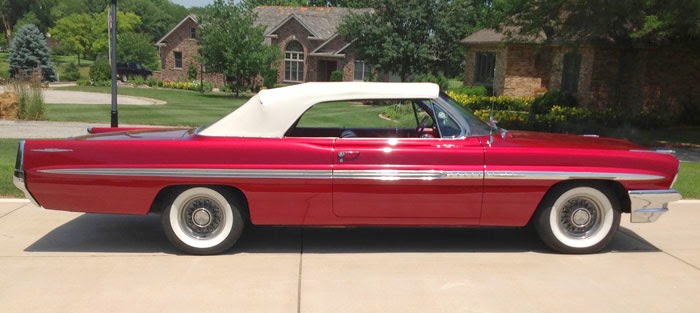 The Pontiac
Bonneville was turning into a popular car, thanks to its luxury
trappings. Though it was Pontiac's most expensive offering, it touted
its performance capabilities for personal or family use, by offering
different models for different tastes -- the snazzy convertible,
practical sedan, kid-oriented station wagon, or sporty coupe. In the
1961 Bonneville, the split grille returns after a brief hiatus. The
split is marked by a bold V-shaped extension of the deck lid adorned by
Pontiac's arrowhead logo. In the back, the Bonneville name sat between 3
taillights on either side.
The Pontiac
Bonneville was turning into a popular car, thanks to its luxury
trappings. Though it was Pontiac's most expensive offering, it touted
its performance capabilities for personal or family use, by offering
different models for different tastes -- the snazzy convertible,
practical sedan, kid-oriented station wagon, or sporty coupe. In the
1961 Bonneville, the split grille returns after a brief hiatus. The
split is marked by a bold V-shaped extension of the deck lid adorned by
Pontiac's arrowhead logo. In the back, the Bonneville name sat between 3
taillights on either side.The new Trophy V8 engine and the unique wide track design were used as the big selling points for the 1961 Bonneville. Matched with a 4-speed Hydramatic, the rear-wheel drive Bonny hit a range of horsepowers depending on whether it had a 2-barrel, 4-barrel, or the TriPower (three 2-barrels) carburetor. It needed a big block engine, because its full-size body weighed almost two tons.
The sedan, convertible, coupe, and wagon featured carpeted and wood-trimmed interiors. Leather seats were optional (standard in the convertible), as were power windows, locks, and seats.


Sunday, November 3, 2013
Boyd Coddington's Collection | Chasing Classic Cars
Wayne gets a glimpse at three of Boyd Coddington's awesome rides.
Lamorghini Miura Unearthed
Wayne takes a quick pit stop in the Midwest to inspect a rare Lamborghini hidden for years in a decrepit garage. | For more
1975 Jaguar XJ 5.3 V12 Coupé

1975 Jaguar XJ 5.3 V12 Coupé Series 2
Original V12-engine with 5,343 cm³ and 285 hp. Automatic transmission. White colour with black leather interior. The Coupé version of the Jaguar XJ12 was already announced in 1973, but it took two more years until 1975 before the car finally went on sale. Due to the fuel crisis and recession at that time Jaguar could only sell 2,262 cars in total. This small number together with the timeless beautiful styling and its great powerful V12-engine makes the XJ 5.3 Coupé so desirable and collectable today. This XJ 5.3 Coupé is in original condition and has only 45,081 miles on the clock. 2 owners. No accidents. Complete registration documents. This is a unique chance that such a rare and original car is for sale here in Thailand.  |


Sunday, July 7, 2013
1970 Cadillac DeVille Convertible
 1970 Cadillac DeVille Convertible.
The car is in excellent restored condition. Zero rust. The actual original miles on the
odometer of this vehicle 57,336.
I am the 4th owner and have just recently
completed a restoration and re-paint.
It is finished in it's stunning original Blue
Metallic Paint, Blue Convertible Top, white-
wall

radial tires and Cadillac spoke hub caps.The
Front and Rear Seats, Dash and Door
Panels
are in excellent condition as well.. This car
was ordered with factory options including:
Automatic Climate Control, Leather Upholstery, Power Seats with left-hand front control
and
Tilt Wheel.
 All mechanical, electrical and parts have been meticulously maintained and the Cadillac 472
 cubic inch engine and automatic transmission are original and in excellent working order as
well.
This car needs nothing to win trophies or to simply cruise around.
If you're looking for a beautiful, restored 1970 Cadillac Convertible, this is it! Please call me
if you are
Monday, June 24, 2013
1941 Cadillac 6267D Convertible Coupe
| Body Style: | American Classic |
| Cylinders: | 8 Cylinder |
| Transmission: | Manual |
| Exterior Color: | Oceano Blue |
| Interior Color: | Tan Leather |
| Miles: | 19,680 |
| Stock Number: | 2565 |
| VIN: | 2565 |


 |  |  |  |  | ||
 |
Wayne Carini
Wayne Carini, Owner


With a lifetime of experience in automobile restoration under his belt, master car restorer Wayne Carini has a resume that includes body and paint work on rare car collections owned by the likes of David Letterman, tennis great Ivan Lendl and the DuPont family. He's been featured in the New York Times as well as numerous automobile magazines, and starred in two one-hour television specials.
Now, Chasing Classic Cars gives viewers a true insider's look into Wayne's inner circle as he embarks on his personal mission to uncover the world's most rare and exotic cars. Filmed entirely in high definition, Chasing Classic Cars welcomes you into the elite club of car restorers and collectors as Wayne buys, restores and sells vintage rides, and the owners of the most exclusive and secret garages open up their doors only to Wayne.
Wayne's passion for cars started when he was a child, working alongside his father on such classics as Duesenbergs, Lincolns, Packards and Ford Model As. Then, at just 9 years of age, he experienced a life altering event: he went for a ride in his first Ferrari, a 1960 Rosso Chiaro 250 SWB to be exact.
Wayne was instantly bitten by the Ferrari bug and hooked for life. Automobiles have been Wayne's passion ever since.
Wayne learned the art of Ferrari restoration from his mentor Francois Sicard -- a former Ferrari racing mechanic and widely considered to be the foremost Ferrari expert on the East Coast -- and his good friend Luigi Chinetti Jr., whose father Luigi Chinetti Sr. won the 1949 24 Hours of Le Mans race for Ferrari and opened the first Ferrari dealership in the country.
Since that time, Wayne has been the owner and operator of three companies in Portland, Conn.: F40 Motorsports , Continental Auto Ltd. and Carini Carozzeria.
F40 Motorsports buys and sells vintage and classic automobiles. Continental Auto Ltd. is a collision shop specializing in high-end and exotic automobile repair. Carini Carozzeria is the restoration shop where Wayne spends most of his time. And while Wayne loves restoring cars to perfection, his personal preference is for unrestored, original cars. Often shown in the elite "preservation class" at concourses nationwide, these increasingly rare cars are the focus of Wayne's private collection.
At home Wayne is a dedicated father of two daughters and husband of 24 years. The family resides in rural Connecticut, in a log home that Wayne built 33 years ago. An avid supporter of autism research organizations, Wayne helps organize and sponsor car events for the benefit of children and adults with autism. His incentive to find a cure or treatment is his youngest daughter, who was diagnosed with autism at an early age.
Wayne is also involved in and regularly attends many different car clubs and events to get young people involved in the car collector hobby. He believes that without young people's involvement, the car collector tradition will disappear. His latest passion is convincing families with special needs children to consider placing collector cars into a special needs trust with the hope that the cars will benefit the children in the future.
Prior to Chasing Classic Cars, Wayne appeared in two hour-long television specials for Discovery's HD Theater Channel: Monterey Week and The World's Most Expensive Cars.
Sunday, May 26, 2013
1967 Chrysler Imperial Crown Coupe - Jay Leno's Garage
Jay asks Chief Creative Officer Shiro Nakamura a burning question: will Nissan resurrect the 240Z to celebrate their 80th anniversary
Nissan Fairlady aka Datsun 240Z - Jay Leno's Garage
Jay asks Chief Creative Officer Shiro Nakamura a burning question: will Nissan resurrect the 240Z to celebrate their 80th anniversary
1971 Datsun 510 - Jay Leno's Garage
The Tonight Show's prop master Greg Elliot stops by with his speedy ground-up restomod - a collector's car in the making and so much fun to drive!
1911 Packard Model 18 - Jay Leno's Garage
Take a ride with Jay in this 30 hp, 326-inch, 4-cylinder brad-adorned beauty, with a lineage that can be traced to its original owner.
Subscribe to:
Posts (Atom)